







Crystal Structure and Energy: Understanding Molecular Vibrations
The Science Behind Why Crystals Are Unique Energy Conductors
Every month, over 30,000 students, scientists, and curious minds in India search for "crystal molecular structure" (क्रिस्टल आणविक संरचना), "vibrational frequency of crystals," and "crystal lattice structure" because they want to understand the real science behind these remarkable formations.
This comprehensive guide bridges physics, chemistry, and energy medicine—explaining exactly how crystal structure creates unique energetic properties, why certain crystals conduct energy better than others, and the measurable science behind crystal vibrations.
What Makes Crystals Special? The Structure Story
Crystalline vs. Non-Crystalline Matter
Everything solid exists in one of two states:
1. Crystalline (Ordered)
- Atoms arranged in highly organized, repeating patterns
- Geometric precision at the molecular level
- Examples: Diamond, quartz, salt, metals, ice, sugar
- Properties: Specific melting points, defined structure, directional properties
2. Amorphous/Non-Crystalline (Disordered)
- Atoms arranged randomly without repeating pattern
- Chaotic molecular arrangement
- Examples: Glass, plastic, rubber, amber, obsidian (volcanic glass)
- Properties: Gradual softening when heated, isotropic (same in all directions)
Critical Distinction: While obsidian and amber are used in healing, they're technically NOT crystals—they're mineraloids (mineral-like substances without crystal structure). True healing crystal practitioners distinguish between these, though both have energetic properties.
The Crystal Lattice: Nature's Perfect Architecture
What is a Crystal Lattice? (क्रिस्टल जाली क्या है?)
A crystal lattice is the three-dimensional geometric arrangement of atoms, molecules, or ions in a crystalline solid, repeating infinitely in all directions.
हिंदी में सरल शब्दों में: क्रिस्टल जाली एक त्रि-आयामी ज्यामितीय व्यवस्था है जिसमें परमाणु, अणु या आयन एक निश्चित पैटर्न में व्यवस्थित होते हैं जो सभी दिशाओं में अनंत रूप से दोहराता है।
The Building Blocks
Unit Cell (इकाई कोशिका):
- The smallest repeating unit of the crystal lattice
- Like a single brick in a massive building
- Multiply the unit cell infinitely = entire crystal structure
- Contains all the structural information of the crystal
Seven Crystal Systems:
Based on unit cell geometry, all crystals fall into seven categories:
| System | Axes | Angles | Examples |
|---|---|---|---|
| Cubic | a=b=c | All 90° | Diamond, Pyrite, Fluorite |
| Tetragonal | a=b≠c | All 90° | Zircon, Rutile |
| Orthorhombic | a≠b≠c | All 90° | Topaz, Aragonite, Sulfur |
| Hexagonal | a=b≠c | 90°, 90°, 120° | Emerald, Aquamarine, Apatite |
| Trigonal | a=b=c | All equal ≠90° | Quartz, Calcite, Tourmaline |
| Monoclinic | a≠b≠c | 90°, β≠90°, 90° | Gypsum, Jade, Malachite |
| Triclinic | a≠b≠c | All ≠90° | Labradorite, Amazonite, Kyanite |
Why This Matters for Energy:
- Different geometries = different vibrational properties
- Symmetry affects how energy flows through the crystal
- Structure determines piezoelectric, optical, and electromagnetic properties
The Science of Crystal Vibrations
What Does "Vibration" Actually Mean?
At the atomic level, NOTHING is truly still.
Three Types of Atomic Motion:
1. Translational Vibration
- Atoms oscillate back and forth around their equilibrium positions
- Like a spring bouncing after being compressed
- Temperature increases = atoms vibrate faster
- This is what we measure as heat
2. Rotational Vibration
- Molecules rotate around their center of mass
- More common in gases and liquids than solids
- Minimal in tightly-packed crystal structures
3. Vibrational Modes (Phonons)
- Collective vibrations of atoms in a lattice
- Travels through crystal as waves (like sound waves)
- Different frequencies based on crystal structure
- This is key to crystal healing theory
Vibrational Frequency: The Crystal's Signature
Every crystal has a natural resonant frequency (or multiple frequencies) determined by:
1. Molecular Composition
- What atoms/molecules make up the crystal
- Atomic weight and bonding strength
- Chemical formula determines base frequency
Examples:
- Quartz (SiO₂): Silicon and oxygen in 1:2 ratio
- Diamond (C): Pure carbon in tetrahedral arrangement
- Calcite (CaCO₃): Calcium carbonate
2. Crystal Structure
- How atoms are arranged geometrically
- Symmetry and lattice type
- Determines specific vibrational modes
Why Quartz is Special:
- Hexagonal crystal system (high symmetry)
- Strong silicon-oxygen bonds
- Extremely regular lattice (minimal defects)
- Result: Incredibly stable, precise vibration at 32,768 Hz (2¹⁵ Hz)
3. Temperature
- Higher temperature = faster vibration
- Lower temperature = slower vibration
- Absolute zero (0 Kelvin/-273.15°C) = minimum possible vibration (quantum zero-point energy)
4. Pressure and Stress
- Mechanical stress changes vibrational frequency
- This is the basis of piezoelectricity
- Crystals "remember" stress through altered vibrations
5. Crystal Defects and Impurities
- Perfect crystals are rare—most have imperfections
- Defects create additional vibrational modes
- Impurities (like iron in amethyst creating purple color) alter frequency
- This is why natural crystals vary in energy quality
Piezoelectricity: The Most Important Crystal Property
What is the Piezoelectric Effect?
Piezoelectricity (from Greek piezein = to press) is the ability of certain crystals to generate electric charge when mechanically stressed, and conversely, to deform mechanically when exposed to an electric field.
Discovery: French physicists Pierre and Jacques Curie, 1880
Bidirectional Effect:
- Direct Piezoelectric Effect: Mechanical stress → Electrical charge
- Reverse Piezoelectric Effect: Electrical field → Mechanical deformation
How It Works (The Science)
1. Crystal Structure Requirements:
- Must lack a center of symmetry (non-centrosymmetric)
- Asymmetric charge distribution when compressed
- About 20% of all crystals are piezoelectric
Piezoelectric Crystals:
✓ Quartz (SiO₂)
✓ Tourmaline
✓ Topaz
✓ Rochelle Salt
✓ Berlinite
✗ Diamond (too symmetric - NOT piezoelectric despite being a crystal)
✗ Calcite (has center of symmetry - NOT piezoelectric)
2. Mechanism in Quartz:
- Silicon (Si⁴⁺) and Oxygen (O²⁻) ions naturally arranged in specific geometry
- When compressed, positive and negative charge centers shift
- This separation creates electric dipole moment
- Measurable voltage appears across crystal faces
- When voltage applied, electric field causes physical deformation
3. Mathematical Expression:
Direct Effect: P = d × σ
(Polarization = piezoelectric coefficient × applied stress)

Reverse Effect: S = d × E
(Strain = piezoelectric coefficient × electric field)
Real-World Applications (Why It Matters)
1. Timekeeping (Watches and Clocks)
- Quartz crystal cut to specific dimensions
- Apply alternating electric field
- Crystal vibrates at natural resonant frequency (32,768 Hz)
- Divide by 2¹⁵ = 1 Hz (one pulse per second)
- Accuracy: ±15 seconds per month
2. Medical Ultrasound
- Piezoelectric crystals generate high-frequency sound waves (1-20 MHz)
- Emitted into body, echoes bounce back
- Same crystal detects returning waves (converts sound to electricity)
- Creates image of internal organs, babies in womb
Used in millions of Indian hospitals daily
3. Electronics & Communication
- Microphones: Sound pressure → electrical signal
- Speakers: Electrical signal → sound vibration
- Radio transmitters/receivers: Frequency stabilization
- Sensors: Pressure, force, acceleration detection
4. Ignition Systems
- Piezo lighters and gas stoves
- Mechanical button press → electrical spark
- No battery required
Every Indian household uses piezoelectric crystals daily
5. Energy Harvesting
- Converts mechanical energy (footsteps, traffic vibrations) into electricity
- Research into piezoelectric roads and floors
- IIT research projects exploring this technology
The Healing Connection
Scientific Hypothesis:
If piezoelectric crystals:
- Generate electrical fields when compressed (proven)
- Respond to electrical/electromagnetic fields (proven)
- Vibrate at stable, consistent frequencies (proven)
Then theoretically:
- They could interact with the human bioelectrical field
- Body's electrical activity (heart ECG, brain EEG) might influence crystals
- Crystals' stable frequencies might influence chaotic body frequencies
Current Scientific Status:
- Mechanism: Plausible based on established physics
- Clinical Evidence: Limited but emerging
- Explanation: The gap between "could theoretically" and "definitively does" requires more research
Resonance: The Key to Crystal-Body Interaction
What is Resonance? (अनुनाद क्या है?)
Resonance occurs when one vibrating system drives another system to oscillate at a specific frequency with greater amplitude.
Classic Example: The Opera Singer and the Wine Glass
- Singer produces sound at glass's natural frequency
- Sound waves transfer energy to glass
- Glass vibrations amplify
- Amplitude increases until glass shatters
- This is resonance in action
The Sympathetic Vibration Principle
Demonstration:
- Place two identical tuning forks near each other
- Strike one fork → it vibrates and produces sound
- Second fork begins vibrating WITHOUT being touched
- Both vibrate at same frequency (sympathetic resonance)
- Energy transferred through air via sound waves
Crystal Resonance in the Body (Theory)
1. Human Body as Vibrational System:
- Every cell, organ, and system has natural frequency
- Heart: ~1-2 Hz (resting heartbeat)
- Brain waves: 0.5-100 Hz (delta to gamma waves)
- Cellular metabolism: Various frequencies
- Vocal cords: 85-255 Hz (human voice range)
2. Healthy vs. Diseased Frequencies:
- Emerging research suggests healthy cells vibrate at specific frequencies
- Disease/stress may alter these frequencies
- Tumors, inflammation, dysfunction = frequency disruption
3. Crystal as Frequency Stabilizer:
Hypothesis:
- Crystals have extremely stable, consistent frequencies
- Due to perfect lattice structure and piezoelectric properties
- When held near body, crystal's stable frequency may:
- Entrain (synchronize) chaotic body frequencies
- Restore optimal vibrational patterns
- Like tuning fork correcting off-key vibration
4. Bioelectromagnetic Interaction:
- Human body generates measurable electromagnetic field
- Strongest around heart (detected up to 3 feet away)
- Brain, nervous system also generate EM fields
- Piezoelectric crystals respond to EM fields
- Could create bidirectional energy exchange
Musical Analogy:
Think of crystals as "tuning forks" for your body's energy system:
- Off-key instrument (imbalanced chakra/organ) = disease
- Crystal provides perfect pitch reference
- Body "tunes itself" to crystal's stable frequency
- Harmony restored = health improved
Different Crystals, Different Vibrations
Why Each Crystal is Unique
Crystal Energy Profile Determined By:
1. Chemical Composition
Different elements = different atomic weights = different frequencies
| Crystal | Composition | Primary Element | Energy Quality |
|---|---|---|---|
| Quartz | SiO₂ | Silicon | Amplification, clarity |
| Amethyst | SiO₂ + Fe | Silicon + Iron | Calming, spiritual |
| Citrine | SiO₂ + Fe | Silicon + Iron (heated) | Energizing, abundance |
| Diamond | C | Carbon | Purity, amplification |
| Ruby | Al₂O₃ + Cr | Aluminum oxide + Chromium | Vitality, passion |
| Emerald | Be₃Al₂(SiO₃)₆ + Cr/V | Beryl + Chromium | Heart healing, growth |
2. Crystal System/Symmetry
Geometric arrangement affects energy flow direction:
- Cubic (Diamond, Pyrite): Equal in all directions (isotropic)
- Hexagonal (Quartz, Emerald): Six-fold symmetry, directional energy flow
- Trigonal (Tourmaline): Spiral energy, piezoelectric poles at each end
- Monoclinic (Malachite, Jade): Asymmetric, complex energy patterns
3. Color (Light Frequency)
Color = specific wavelength of visible light:
- Red (Ruby, Garnet): 620-750 nm, lowest frequency visible light, energizing
- Orange (Carnelian): 590-620 nm, creative, sacral chakra
- Yellow (Citrine): 570-590 nm, mental clarity, solar plexus
- Green (Emerald, Jade): 495-570 nm, healing, heart chakra
- Blue (Sapphire, Lapis): 450-495 nm, calming, throat chakra
- Violet (Amethyst): 380-450 nm, highest frequency visible light, spiritual
Color is frequency—when you look at a crystal, you're seeing specific light vibrations
4. Internal Structure & Inclusions
- Rutilated Quartz: Golden rutile needles create additional energy pathways
- Phantom Quartz: Internal crystal growth stages, layered energy
- Tourmalinated Quartz: Black tourmaline inclusions add grounding to amplification
- Chlorite Quartz: Green inclusions enhance heart healing properties
5. Formation Conditions
- Temperature of formation: Higher temp = higher energy signature
- Pressure: Deep earth formation (diamonds) vs. near surface (quartz)
- Time: Millions of years = more refined energy structure
- Location: Earth's specific electromagnetic environment during growth
Measuring Crystal Properties: The Science
Laboratory Methods to Study Crystals
1. X-Ray Crystallography
- Directs X-rays at crystal
- X-rays diffract (bend) based on atomic arrangement
- Creates diffraction pattern unique to each crystal structure
- This is how we discovered DNA structure, crystal lattices
- Result: Precise 3D map of atomic positions
Nobel Prizes awarded for this technique (1914, 1915, 1962)
2. Spectroscopy (Light Analysis)
- Raman Spectroscopy: Measures vibrational modes of molecules
- Infrared Spectroscopy: Identifies molecular bonds
- UV-Vis Spectroscopy: Analyzes color/light absorption
- Result: Unique spectral "fingerprint" of each crystal
3. Piezoelectric Measurement
- Apply known pressure, measure electrical output
- Apply known voltage, measure physical deformation
- Quantifies piezoelectric coefficient
- Result: Numerical value of crystal's electromechanical coupling
4. Thermal Analysis
- Differential Scanning Calorimetry (DSC)
- Measures heat absorption/release
- Identifies phase transitions, melting point
- Result: Thermodynamic properties
5. Hardness Testing (Mohs Scale)
| Hardness | Mineral | Can Scratch |
|---|---|---|
| 1 | Talc | Fingernail scratches it |
| 2 | Gypsum | Fingernail barely scratches |
| 3 | Calcite | Copper coin scratches |
| 4 | Fluorite | Steel knife scratches easily |
| 5 | Apatite | Steel knife scratches with difficulty |
| 6 | Orthoclase (Feldspar) | Steel file scratches |
| 7 | Quartz | Scratches glass |
| 8 | Topaz | Scratches quartz |
| 9 | Corundum (Sapphire/Ruby) | Scratches topaz |
| 10 | Diamond | Scratches everything |
Hardness correlates with bond strength = vibrational stability
Quartz: The Master Crystal (A Case Study)
Why Quartz Dominates Technology and Healing
Chemical Formula: SiO₂ (Silicon Dioxide)
Crystal System: Trigonal (hexagonal appearance)
Hardness: 7 (Mohs)
Specific Gravity: 2.65
Piezoelectric: Yes (strongly)
Natural Frequency: 32,768 Hz (when cut to standard dimensions)
The Quartz Advantage
1. Abundance
- Second most abundant mineral in Earth's crust (after feldspar)
- Found on every continent
- Makes it affordable and accessible
2. Exceptional Stability
- Extremely regular crystal lattice (minimal defects)
- Strong covalent Si-O bonds
- Temperature stable (-40°C to +500°C operational range)
- Chemically inert (resists corrosion)
3. Strong Piezoelectric Properties
- Among the strongest naturally occurring piezoelectric materials
- Reliable, predictable electrical response
- Reversible effect (mechanical ↔ electrical)
4. Optical Properties
- Transparent to UV, visible, and infrared light
- Useful in optical instruments
- Varieties (amethyst, citrine, rose, smoky) provide different color frequencies
Quartz Varieties and Their Frequencies
While all quartz has same basic structure (SiO₂), trace impurities create different energy signatures:
| Variety | Color Cause | Traditional Energy Property |
|---|---|---|
| Clear Quartz | None (pure SiO₂) | Amplification, programmability |
| Amethyst | Iron (Fe³⁺) + radiation | Calming, spiritual connection |
| Citrine | Iron (Fe³⁺) + heat | Energizing, manifestation |
| Rose Quartz | Titanium/Iron/Manganese | Love, emotional healing |
| Smoky Quartz | Aluminum + radiation | Grounding, protection |
| Rutilated Quartz | Rutile (TiO₂) inclusions | Amplified energy, manifestation |
Scientific Note: The trace impurities (often <0.01%) don't significantly change the crystal structure but DO alter light absorption/reflection = different color frequencies interacting with observer.
Crystal Quality and Energy Effectiveness
What Makes a "High Quality" Healing Crystal?
From Scientific Perspective:
1. Structural Integrity
- Minimal defects: Fewer imperfections = more stable vibration
- No cracks or fractures: Interrupts lattice continuity = disrupts energy flow
- Good clarity: Light can pass through unobstructed
Testing: Examine under light and magnification
2. Natural Formation
-
Natural vs. Lab-Grown:
- Chemically identical
- Lab-grown often more perfect (fewer defects)
- Natural formed under Earth's specific EM field conditions
- Debate: Does formation location/process matter energetically?
-
Untreated vs. Treated:
- Heat treatment (citrine from amethyst)
- Irradiation (smoky quartz, some blue topaz)
- Dyeing (howlite to fake turquoise)
- Treated stones have altered energy signatures
3. Size and Mass
- Larger crystal = more atoms = stronger collective vibration
- Mass affects resonant frequency (lower frequency for larger stones)
- Minimum effective size debated (1-3 carats for wearing jewelry)
4. Cut and Shape
- Faceting creates multiple reflection/refraction surfaces
- Points and terminations direct energy flow
- Spheres radiate evenly in all directions
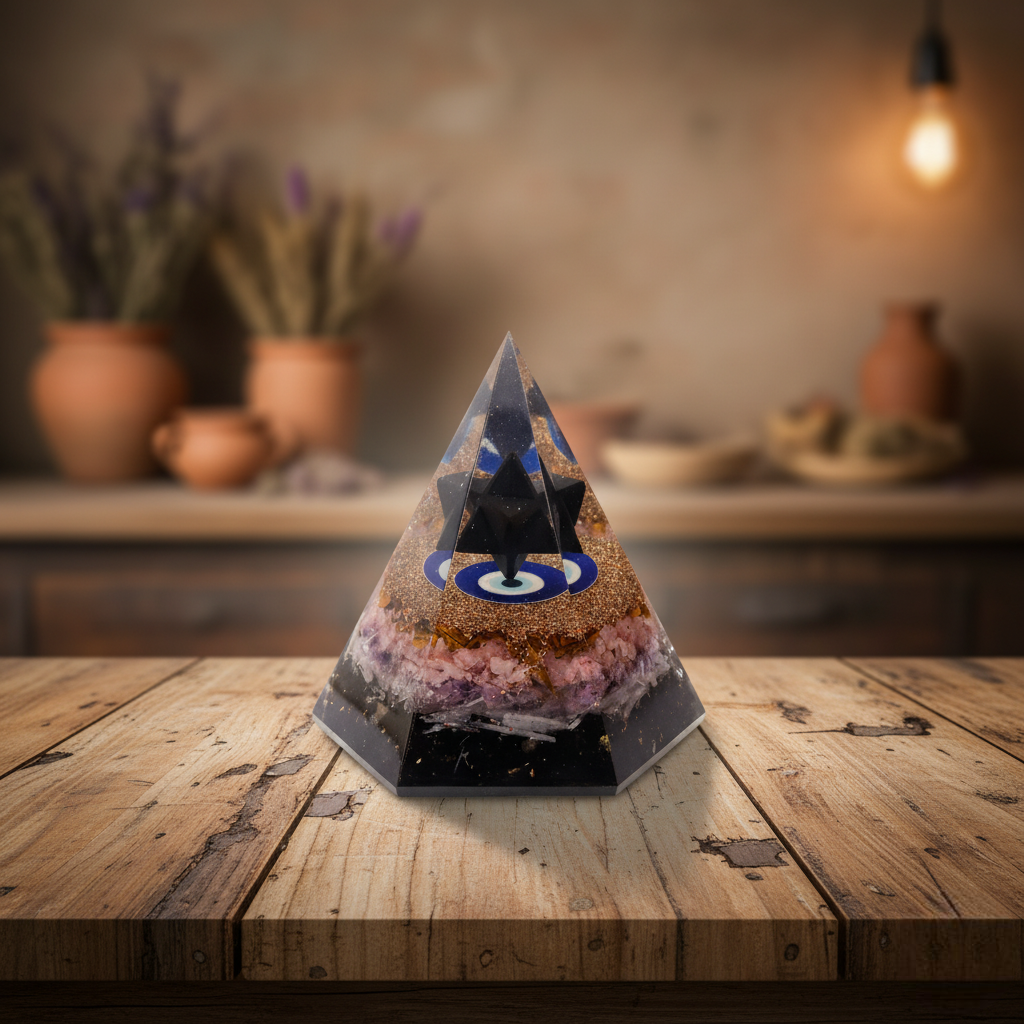
- Specific sacred geometry shapes (pyramids, merkabas) claimed to enhance energy
From Energy Healing Perspective:
Additional Quality Factors:
- Ethical sourcing: Crystal's energetic history matters to practitioners
- Cleansed state: Removed previous owner's energy
- Programmer/Intent: Some believe consciousness can be embedded in crystal lattice
Practical Applications: Educational Crystal Set
AstroViz Educational Crystal Collection
For Students, Teachers, and Science Enthusiasts
Perfect for understanding crystal structure and properties through hands-on exploration:
Basic Educational Set (Rs. 1,499):
Includes specimens demonstrating different crystal systems:
- Clear Quartz (Trigonal/Hexagonal) - Classic 6-sided prism, demonstrates piezoelectricity
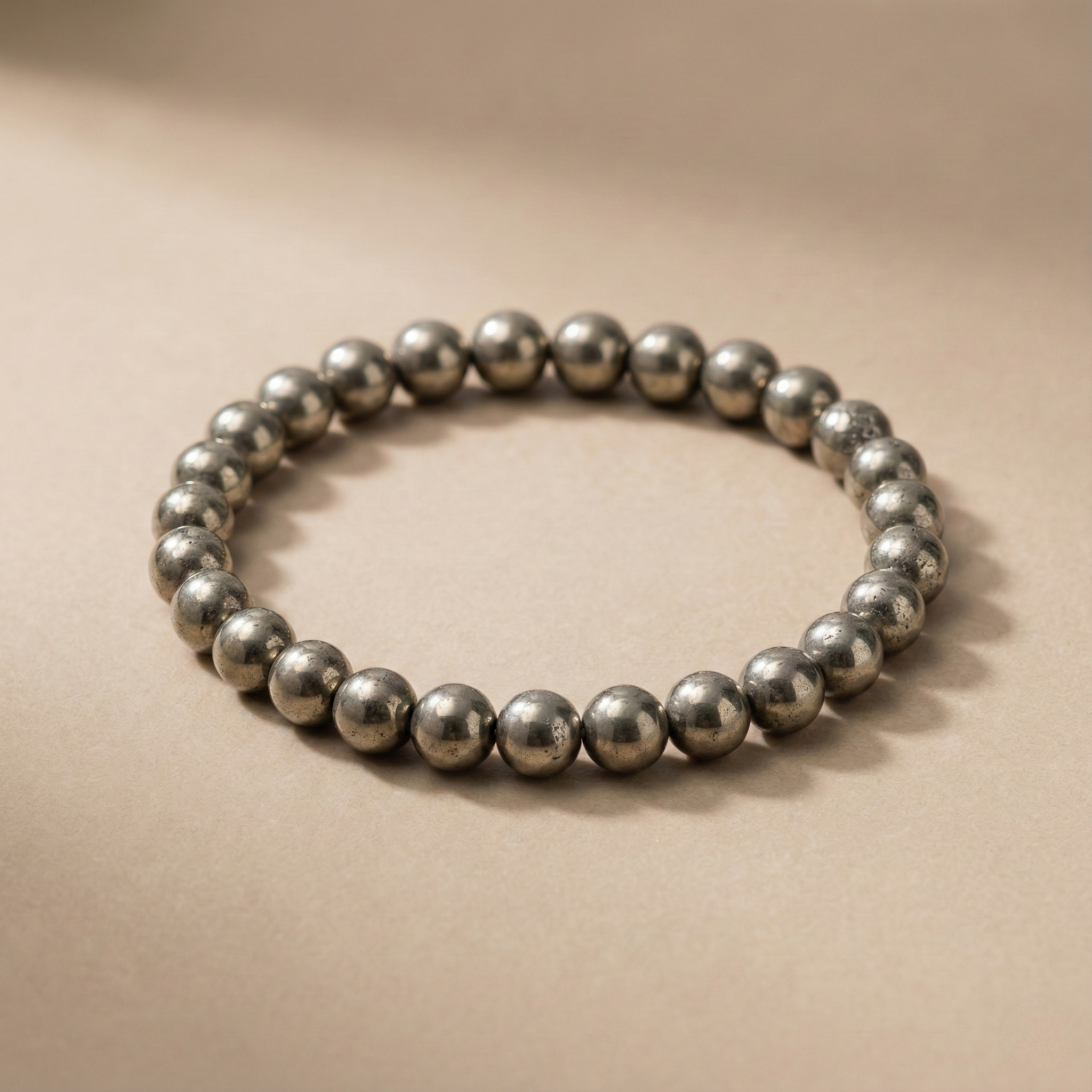
- Pyrite (Cubic) - Perfect cubic crystals, metallic luster, demonstrates cubic symmetry
- Fluorite (Cubic) - Octahedral formations, demonstrates cleavage planes
- Calcite (Trigonal) - Double refraction demonstration, rhombohedral cleavage
- Tourmaline (Trigonal) - Demonstrates piezoelectric effect and striations
- Educational Guide: Crystal systems, properties, experiments to try
Advanced Scientific Set (Rs. 2,999):
Everything in basic set PLUS:
- Amethyst cluster - Shows natural crystal formation on matrix
- Citrine - Heat-treated quartz comparison
- Rutilated Quartz - Inclusions and internal structure
- Rose Quartz - Trace element effects on color
- Magnification loupe - Examine crystal structure up close
- Hardness testing kit - Mohs scale experiments
- Detailed scientific manual - Experiments, molecular diagrams, educational activities
Experiments & Learning Activities:
-
Piezoelectric Demonstration
- Connect quartz to LED
- Apply pressure/heat
- Observe light generation
-
Hardness Testing
- Systematically test which crystals scratch others
- Create personal Mohs scale
-
Optical Properties
- Observe double refraction in calcite
- Light transmission through different crystals
- Color spectrum analysis
-
Crystal Growth (Bonus activity)
- Grow your own crystals (alum, salt, sugar)
- Observe lattice formation over time
-
Vibrational Frequency
- Tap crystals and listen to resonance
- Compare sound between crystal types
Perfect For:
✓ School science projects (Classes 6-12)
✓ College geology/physics students
✓ Science teachers demonstrating crystal properties
✓ Homeschooling parents teaching chemistry/physics
✓ Adults curious about crystal science
✓ Bridge between science and metaphysics learning
Special Educational Pricing:
Use code SCIENCE20 for 20% off educational crystal sets
Bulk Orders for Schools:
Contact us for special institutional pricing for science laboratories
Bridging Science and Spirituality
The Integrated Understanding
What Science Confirms:
✓ Crystals have precise, measurable molecular structures
✓ Crystal lattices create stable, consistent vibrations
✓ Piezoelectric properties are real and technologically utilized
✓ Different crystals have different vibrational frequencies
✓ Crystals respond to and generate electromagnetic fields
✓ Structure determines properties (symmetry, hardness, optical behavior)
What Science Is Investigating:
⚬ Mechanism of crystal-biofield interaction
⚬ Whether crystal frequencies can influence biological systems
⚬ Difference between natural and lab-grown crystals energetically
⚬ Role of consciousness/intention in crystal programming
⚬ Measurement methods for "subtle energy"
What Remains Experiential:
◇ Individual subjective experiences with crystals
◇ Healing anecdotes and traditional knowledge
◇ Chakra system correlation with crystal properties
◇ Spiritual/consciousness expansion claims
The Balanced Perspective:
- Crystal structure and vibration are REAL physics
- Technology proves crystals have measurable energy properties
- Whether these properties translate to human healing requires more research
- Absence of complete proof ≠ proof of absence
- Personal experience and traditional wisdom have value
- Open-minded scientific inquiry continues
Both perspectives can coexist:
- Scientist: "Crystals have measurable vibrational frequencies due to atomic structure"
- Healer: "Those vibrations interact with our body's energy field to promote balance"
- Integrated view: "The mechanism may not be fully understood, but the phenomenon is worth exploring"
Frequently Asked Questions
1. Do all crystals have the same vibrational frequency?
No. Each crystal type has unique vibrational properties based on molecular composition, crystal system, and structure. Even within one type (e.g., quartz), variations in size, purity, and internal structure create slightly different frequencies. This is why different crystals are used for different purposes in both technology and healing.
2. Can I measure my crystal's frequency at home?
Precisely measuring vibrational frequency requires laboratory equipment (oscilloscopes, frequency analyzers). However, you can observe some properties: hardness (scratch testing), optical effects (transparency, color, refraction), and even piezoelectric response (some quartz crystals will light an LED when heated or compressed). For exact frequency, professional gemological testing is needed.
3. Are lab-grown crystals as effective as natural ones?
Scientifically: Lab-grown crystals are often MORE perfect—fewer defects, purer composition, more consistent structure. They're chemically and structurally identical to natural crystals. Technology uses lab-grown crystals extensively.
Energetically: Practitioners debate this. Some say natural crystals carry Earth's energy from geological formation. Others say perfection matters more than origin. This is where science and metaphysics diverge—choose based on your personal beliefs.
4. Why does crystal healing emphasize natural, untreated stones?
Scientific reasoning: Heat treatment, irradiation, and dyeing alter the crystal's original structure and can create new defects or change trace element composition. This changes the vibrational signature from its natural state.
Energetic reasoning: Natural formation process is believed to imbue specific Earth energies. Artificial alteration disrupts this energetic imprint.
Practical note: Many commercial crystals are treated (most citrine is heat-treated amethyst, blue topaz is irradiated). Disclosure matters—know what you're buying.
5. How does crystal size affect its vibrational power?
Larger crystals have:
- More atoms participating in collective vibration
- Lower resonant frequency (bigger = deeper tone, like large vs. small guitar string)
- Stronger electromagnetic field generation
- Greater piezoelectric output potential
However, effective size depends on application. For wearing: 3-5 carat minimum. For room energy: 100+ grams. For grids: variety of sizes working together. Quality can compensate for size—a perfect small crystal may outperform flawed large one.
6. Can crystals really be "programmed" with intention?
Scientific perspective: Crystal lattice structure is fixed by atomic bonds—thoughts cannot rearrange atoms. However, some quantum physics theories suggest consciousness may influence matter at subtle levels (controversial, not mainstream science).
Experimental data: Studies on water crystals (Dr. Masaru Emoto) suggest intention affects molecular structure (though methodology was questioned). Princeton Engineering Anomalies Research found human intention can influence random number generators.
Practical approach: Whether "programming" changes the crystal or changes YOUR subconscious association with the crystal, the psychological effect can be real and beneficial. Ritual creates meaning, and meaning affects behavior.
7. What's the difference between a crystal and a gemstone?
Crystal: Defined by molecular structure (ordered lattice)—can be inexpensive (quartz) or valuable (diamond)
Gemstone: Defined by value and beauty—rare, durable, beautiful crystals cut and polished for jewelry
All gemstones are crystals, but not all crystals are gemstones
Examples:
- Diamond: Crystal AND gemstone (valuable)
- Quartz: Crystal but NOT typically gemstone (too common)—though varieties like amethyst ARE gemstones
- Pearl: Gemstone but NOT crystal (organic, amorphous structure)
8. How do I know if my crystal is real or fake?
Testing methods:
- Temperature: Real crystals stay cool to touch (high thermal conductivity)—glass warms quickly
- Hardness: Real quartz (hardness 7) scratches glass—glass doesn't scratch glass
- Bubbles: Glass fakes have air bubbles visible under magnification—crystals have inclusions but not round bubbles
- Weight: Real crystals denser than glass—feel heavier for size
- Professional testing: Gemological certificate provides definitive answer
Common fakes:
- Dyed howlite sold as turquoise
- Glass sold as clear quartz
- Reconstituted/pressed stone dust
- Plastic imitations
AstroViz provides certification for all crystals
9. Why are crystals used in technology if they're "just vibrating rocks"?
That's exactly WHY they're used! Their precise, stable, predictable vibrations make them ideal for:
- Timekeeping: Quartz oscillators keep perfect time
- Frequency control: Radios, computers, phones all use crystal oscillators
- Energy conversion: Piezoelectric sensors, microphones, speakers
- Optical applications: Lenses, lasers, fiber optics
- Semiconductors: Silicon crystals in every computer chip
Modern technology IS crystal technology. Over 2 billion quartz crystals manufactured annually for electronics. The same properties useful in technology could theoretically benefit biological systems.
10. Where can I learn more about crystal science in India?
Academic Resources:
- IIT courses in solid-state physics and crystallography
- National Institute of Gemology (Mumbai, Jaipur)
- Gemological Institute of India
- University geology departments
Online Learning:
- NPTEL courses (free IIT/IISc lectures)
- Coursera: Materials Science courses
- YouTube: MIT OpenCourseWare Solid State Chemistry
Books:
- "Introduction to Crystallography" by Donald E. Sands
- "The Physics of Crystals" by Joaquim Anjos
- "Crystal Healing: The Science and Psychology" (balanced perspective books)
AstroViz Educational Blog - Regular articles bridging science and crystal healing
Conclusion: Structure Creates Power
Understanding crystal molecular structure transforms "magical rocks" into sophisticated natural technology. The precise geometric arrangement of atoms creates stable vibrations, piezoelectric properties, and unique energetic signatures—all measurable, all scientifically valid.
Whether you're a student exploring physics, a skeptic seeking evidence, or a spiritual seeker understanding the science behind your practice, crystal structure is the foundation:
The Takeaway:
- Crystal lattices create nature's most stable vibrations
- Different structures = different properties = different applications
- The same science powering your smartphone supports healing theories
- Quality, purity, and structure matter for both technology and energy work
- Natural formation creates unique characteristics not fully replicated in labs
- Science and spirituality needn't conflict—they explore the same phenomena from different angles
Your Next Steps:
- Explore crystal structure hands-on with our Educational Crystal Set
- Learn to identify different crystal systems
- Understand which properties matter for your goals
- Choose crystals based on both scientific properties and energetic intention
- Continue learning—crystal science is an active research field
The molecular dance of atoms in perfect geometric harmony isn't just physics—it's the fundamental language of energy, structure, and transformation in our universe.
AstroViz: Where Crystal Science Meets Sacred Wisdom
✓ Certified Natural Crystals with Known Structures
✓ Educational Resources for Scientific Learning
✓ Quality Guaranteed—No Fakes or Treated Stones
✓ Free Shipping Above Rs. 700
Shop Educational Crystals: www.astroviz.in
Collections: Clear Quartz | Amethyst | All Crystals